Living with an autoimmune condition can feel like an ongoing battle with your own body. Chronic inflammation, debilitating fatigue, joint pain, and digestive distress often lead people to seek dietary interventions. Among the most scientifically backed protocols is the Autoimmune Protocol (AIP) diet.
The AIP diet is a specialized, targeted strategy designed to reduce inflammation, heal mucosal leaks in the gut, and alleviate symptoms of autoimmune diseases. Whether you are dealing with Hashimoto’s thyroiditis, rheumatoid arthritis, celiac disease, lupus, or inflammatory bowel disease (IBD), resetting your immune system starts with what you put on your plate.
This comprehensive guide breaks down exactly how to start the AIP diet safely, what foods to include or avoid, and how to transition through its distinct phases without feeling overwhelmed.
Quick Summary: The AIP Diet At a Glance
If you are looking for an immediate overview, this high-density summary outlines the fundamental architecture of the Autoimmune Protocol:
- Core Purpose: To eliminate systemic inflammation, identify hidden food sensitivities, and support cellular gut healing.
- Primary Mechanism: A strict elimination phase followed by a systematic, step-by-step food reintroduction phase.
- Target Foods: Eliminates nightshades, grains, legumes, dairy, processed sugars, nuts, seeds, and food additives. Focuses heavily on nutrient-dense whole foods like organ meats, wild-caught fish, organic vegetables, and healthy fats.
- Duration: The elimination phase typically lasts 30 to 90 days, depending entirely on your individual symptomatic response.
What is the AIP Diet? Understanding the Science and Benefits
The Autoimmune Protocol is an extension of the Paleo diet, but it features much stricter guidelines. While the standard Paleo diet focuses on evolutionary whole foods, the AIP diet eliminates specific food groups that contain compounds known to stimulate the immune system or irritate the intestinal lining.
Medical research suggests that a primary driver of autoimmunity is increased intestinal permeability, commonly referred to as “leaky gut.” When the tight junctions of your intestinal walls loosen, undigested food particles, toxins, and microbes cross into the bloodstream. The immune system flags these foreign invaders, triggering a cascade of system-wide inflammation.
By removing potential dietary triggers, the AIP diet allows the gut lining to repair itself. Concurrently, the diet emphasizes an exceptionally high intake of vitamins, minerals, antioxidants, and essential fatty acids. This dual approach provides the biological building blocks required for tissue regeneration and immune system modulation.
Who Should Try the Autoimmune Protocol?
The AIP diet is specifically optimized for individuals diagnosed with, or experiencing symptoms of, confirmed autoimmune conditions. It is highly beneficial for those dealing with:
- Thyroid Disorders: Hashimoto’s thyroiditis and Graves’ disease.
- Joint and Tissue Conditions: Rheumatoid arthritis, psoriatic arthritis, and systemic lupus erythematosus.
- Digestive Autoimmunity: Crohn’s disease, ulcerative colitis, and celiac disease.
- Skin Manifestations: Psoriasis, eczema, and hidradenitis suppurativa.
- Neurological and Systemic Conditions: Multiple sclerosis and fibromyalgia.
If you experience unexplained chronic fatigue, brain fog, or persistent joint pain without a clear diagnosis, the protocol can also serve as an elite elimination tool to identify specific inflammatory food triggers.
Step-by-Step Guide: How to Start the AIP Diet Successfully
Embarking on the Autoimmune Protocol requires deliberate preparation. Jumping into it overnight can lead to intense food cravings, social isolation, and metabolic fatigue. To guarantee long-term compliance, you should execute your protocol through three distinct, organized phases.
Phase 1: The Preparation and Transition Phase
Before you completely eliminate foods, take one to two weeks to prepare your mind, your kitchen, and your schedule.
- Audit Your Kitchen: Remove non-compliant foods from your immediate sight to eliminate temptation. Clean out your pantry and stock up on AIP-safe staples.
- Batch Cook and Meal Prep: The easiest way to fail the AIP diet is to find yourself hungry without an approved meal readily available. Cook large quantities of protein and roasted vegetables over the weekend.
- Address Lifestyle Factors: Diet alone cannot fix a broken immune system. Prioritize seven to nine hours of quality sleep, implement daily stress-management tools, and engage in gentle, restorative movement like walking or yoga.
Phase 2: The Elimination Phase
This is the core of the protocol. For a period of 30 to 90 days, you will strictly avoid all inflammatory, immunogenic, and gut-irritating foods. Consistency during this phase must be absolute. Even small exposures to cross-reactive proteins can trigger an immune response and skew your results.
Stay in this phase until you experience a measurable, significant reduction in your baseline autoimmune symptoms. If you reach the 90-day mark without any clinical improvement, work alongside a functional medicine practitioner to look into underlying infections, environmental toxins, or severe micronutrient deficiencies.
Phase 3: The Systematic Reintroduction Phase
The elimination phase is never meant to be permanent. Nutrient diversity is critical for long-term microbiome health. Once your symptoms have stabilized, you will begin reintroducing eliminated foods one at a time to test your body’s tolerance.
To safely reintroduce a food, follow this exact scientific framework:
- Select One Food: Choose a food from the least inflammatory categories first, such as fruit-based spices or egg yolks.
- First Taste: Eat a tiny amount (like a quarter of a teaspoon) and wait 15 minutes. Monitor for immediate reactions like lip swelling or hives.
- Small Portion: If no reaction occurs, eat a slightly larger bite (one teaspoon) and wait another 15 minutes.
- Normal Serving: If still clear, consume a normal-sized portion of the food.
- The Observation Window: Stop eating the food completely and return to strict AIP guidelines for the next 3 to 7 days. Monitor your sleep, digestion, mood, skin, and joint pain.
- Track Results: If no symptoms return, that food is successfully cleared for your permanent diet. If symptoms flare up, remove the food immediately and wait until your body resets before testing something new.
AIP Diet Food List: What to Eat and What to Avoid
Navigating grocery stores requires a clear understanding of compliant and non-compliant items. Use this direct structural comparison to guide your shopping trips.
| Food Group | Foods to Avoid (Non-Compliant) | Foods to Include (AIP Approved) |
|---|---|---|
| Grains & Pseudograins | Wheat, rye, barley, oats, rice, corn, quinoa, amaranth, buckwheat | None |
| Dairy Products | Cow, goat, and sheep milk, cheese, yogurt, butter, ghee, cream, whey | Coconut milk, tigernut milk, homemade avocado-based creams |
| Eggs | Whole eggs, egg whites, egg yolks (during elimination) | None |
| Nightshade Vegetables | Tomatoes, white potatoes, eggplants, bell peppers, cayenne, paprika | Sweet potatoes, yams, taro, cassava, carrots, squash, beets |
| Legumes | Black beans, kidney beans, lentils, chickpeas, peanuts, soy, tofu | None |
| Nuts & Seeds | Almonds, walnuts, cashews, chia seeds, flaxseeds, sunflower seeds | Tigernuts (which are actually tubers) |
| Oils & Fats | Vegetable oil, canola oil, soybean oil, corn oil, margarine | Extra virgin olive oil, avocado oil, coconut oil, lard, tallow |
| Sweeteners & Additives | Cane sugar, high-fructose corn syrup, stevia, splenda, carrageenan | Raw honey, maple syrup (in strict moderation) |
💡 Take the Guesswork Out of Your Healing Journey!
If you are managing thyroid inflammation and need more than just a 7-day meal plan, check out
**The Complete Hashimotos AIP Cookbook** on Amazon.
It is the ultimate companion to this beginner’s guide, featuring over 100+ completely **coconut-free, grain-free, and nightshade-free** recipes engineered specifically to lower your antibodies and restore your energy.
➡️ Click here to grab your copy on Amazon today!
A Simple 7-Day AIP Meal Plan for Beginners
To help you visualize how enjoyable and filling this lifestyle can be, follow this sample weekly menu during your elimination phase.
- Breakfast: Ground turkey skillet sauteed with kale, sweet potato cubes, and unrefined coconut oil.
- Lunch: Leftover chicken breast over a large green salad with sliced avocado and olive oil dressing.
- Dinner: Wild-caught baked salmon served with a side of roasted asparagus and mashed cauliflower.
- Breakfast: AIP smoothie made with coconut milk, collagen peptides, half a banana, and a handful of spinach.
- Lunch: Shredded salmon salad mixed with homemade avocado oil mayonnaise, wrapped in large romaine lettuce leaves.
- Dinner: Grass-fed beef stir-fry with broccoli, carrots, and coconut aminos over a bed of riced zucchini.
- Breakfast: Pork sausage patties (spiced with salt, garlic, and rosemary) paired with sliced cucumber and avocado.
- Lunch: Beef and vegetable stir-fry leftovers.
- Dinner: Roasted chicken thighs with crispy skin, served alongside garlic-herb mashed sweet potatoes.
- Breakfast: Sweet potato hash with sliced AIP-compliant bacon and a side of steamed Swiss chard.
- Lunch: Creamy chicken soup made with rich bone broth, carrots, celery, and shredded chicken meat.
- Dinner: Pan-seared white fish topped with a fresh mango-cucumber salsa and a side of roasted butternut squash.
- Breakfast: Leftover chicken soup for a warm, gut-healing start to the morning.
- Lunch: Sliced turkey breast, avocado, cucumber slices, and pickled carrots wrapped in a compliant cassava flour tortilla.
- Dinner: Slow-cooked lamb shanks seasoned with garlic and rosemary, served with roasted root vegetables.
- Breakfast: Coconut milk yogurt alternative topped with sliced strawberries and a sprinkle of sliced tigernuts.
- Lunch: Leftover slow-cooked lamb and root vegetables.
- Dinner: Ground pork and cabbage skillet seasoned with ginger, garlic, and coconut aminos.
- Breakfast: Sautéed beef liver with caramelized onions, paired with baked green plantain slices.
- Lunch: Leftover pork and cabbage skillet.
- Dinner: White meat turkey burgers (no bun) topped with avocado, served with baked parsnip fries.
Aip Diet Recipes
Here are three easy, flavorful AIP recipes that you can batch-cook during your first week. They are entirely free of grains, dairy, eggs, nightshades, and nuts.
1. 🌟 Crispy Ground Turkey & Sweet Potato Breakfast Skillet
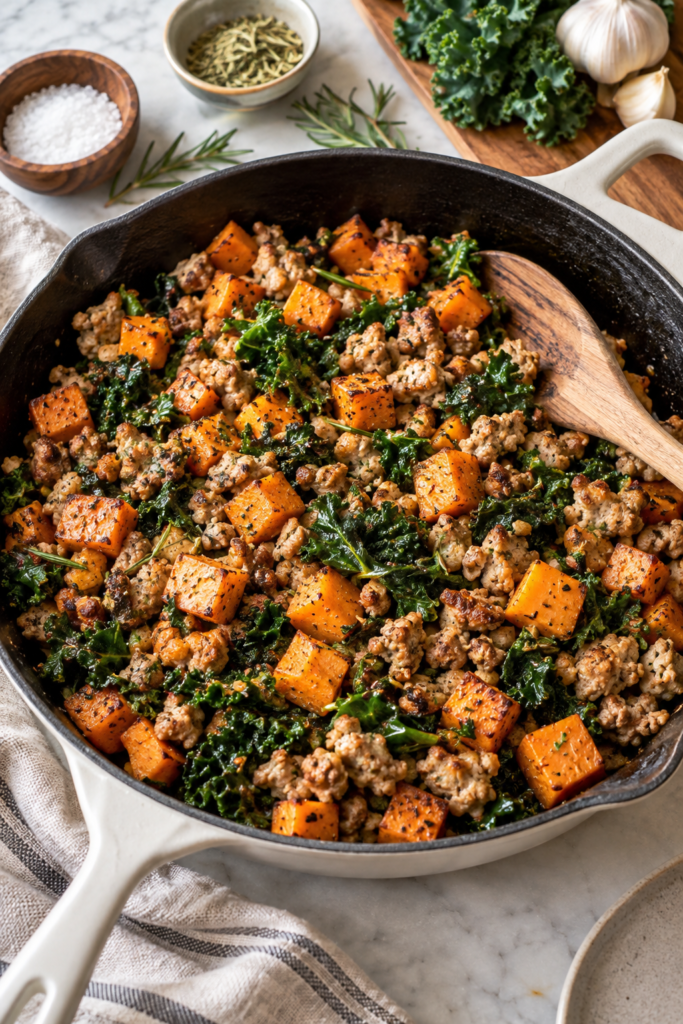
This quick morning scramble gives you healthy complex carbohydrates and clean protein to stabilize your blood sugar right out of bed.
-
- Prep time: 10 minutes | Cook time: 15 minutes | Servings: 2
- Ingredients:
-
- 1 lb ground turkey
- 1 large sweet potato, peeled and finely diced
- 2 cups fresh kale, chopped
- 2 tbsp unrefined coconut oil
- 1 tsp garlic powder
- 1 tsp sea salt
- 1/2 tsp dried rosemary
-
- Instructions:
-
- Melt the coconut oil in a large skillet over medium-high heat.
- Add the diced sweet potatoes to the skillet. Cover and cook for 7 to 8 minutes, stirring occasionally, until they start to soften and brown.
- Push the sweet potatoes to the side of the pan. Add the ground turkey, breaking it up with a spatula.
- Season the meat and potatoes with garlic powder, sea salt, and rosemary. Cook until the turkey is completely browned and no longer pink.
- Toss in the chopped kale and stir everything together for 2 minutes until the kale is wilted. Serve hot.
-
2. 🥣 Gut-Healing Creamy Chicken & Bone Broth Soup
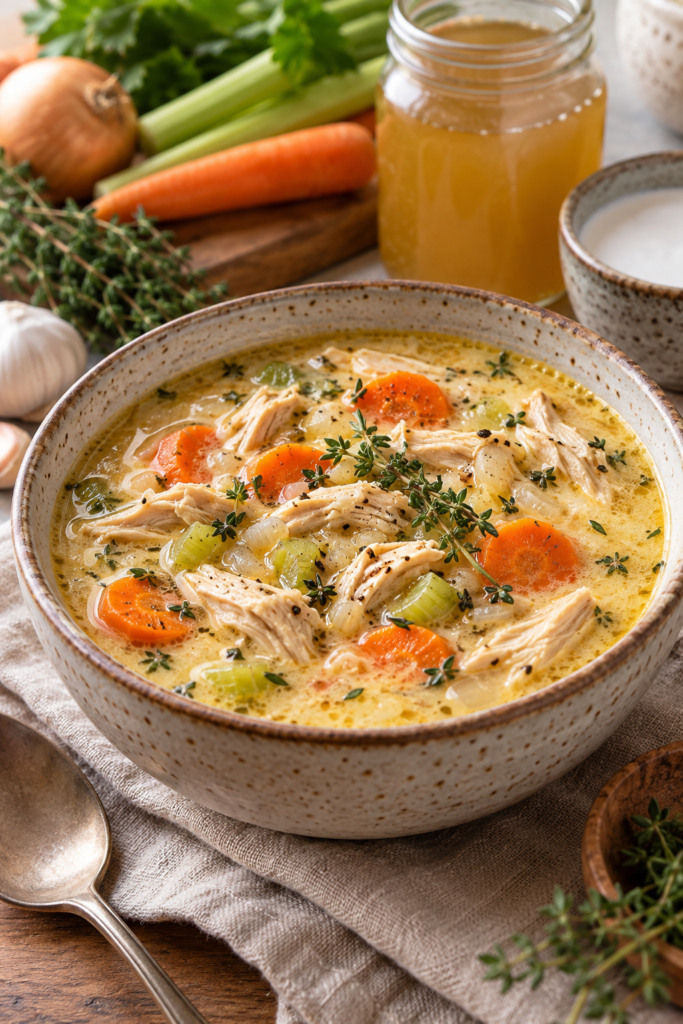
This comforting soup utilizes the amino acids in bone broth to proactively coat and repair the tight junctions of your intestinal lining.
-
- Prep time: 15 minutes | Cook time: 30 minutes | Servings: 4
- Ingredients:
-
- 2 cups cooked chicken breast, shredded
- 4 cups high-quality grass-fed chicken bone broth
- 1 cup coconut milk (canned, additive-free)
- 2 large carrots, sliced into rounds
- 2 celery stalks, diced
- 1 small yellow onion, diced
- 2 cloves garlic, minced
- 1 tbsp olive oil
- 1 tbsp fresh thyme leaves
- 1 tsp sea salt
-
- Instructions:
-
- Heat the olive oil in a large stockpot over medium heat.
- Add the onion, garlic, carrots, and celery. Sauté for about 5 to 6 minutes until the onions are translucent and fragrant.
- Pour in the chicken bone broth, coconut milk, thyme, and sea salt. Bring the mixture to a rolling boil.
- Reduce the heat to low, cover the pot, and let it simmer for 15 minutes until the carrots are fork-tender.
- Stir in the shredded chicken and simmer for an additional 5 minutes to warm the chicken through. Ladle into bowls and serve.
-
3. 🥬 15-Minute Beef & Zucchini Stir-Fry
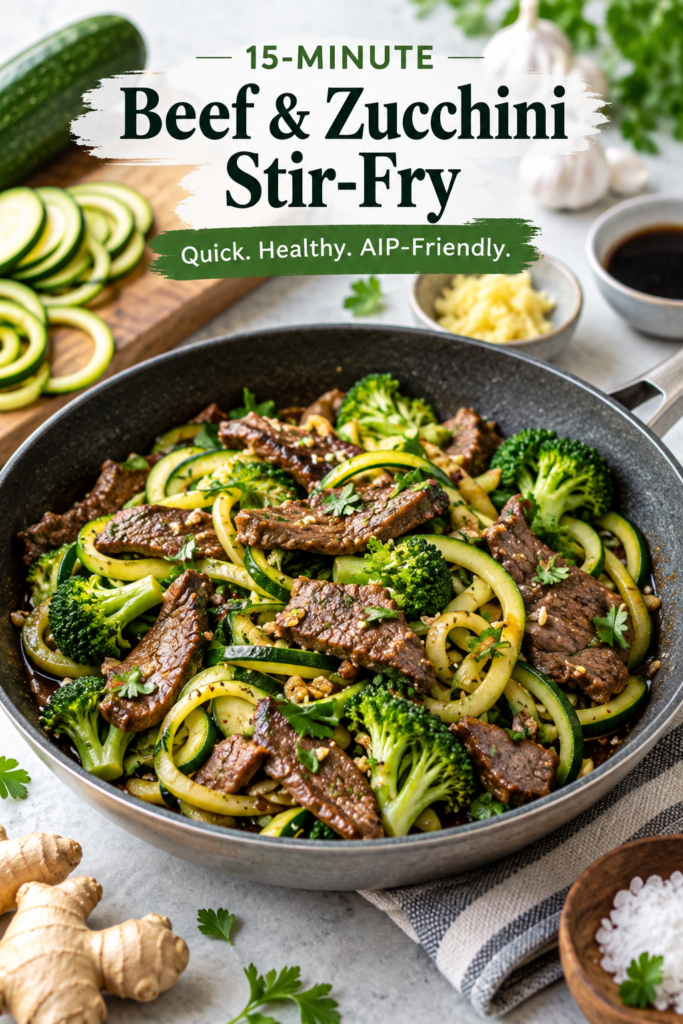
Using coconut aminos gives this stir-fry a savory, slightly sweet flavor that perfectly mimics traditional soy sauce without the inflammatory soy proteins.
-
- Prep time: 10 minutes | Cook time: 10 minutes | Servings: 2
- Ingredients:
-
- 1 lb grass-fed skirt steak or sirloin, thinly sliced across the grain
- 2 medium zucchini, spiralized into noodles or thinly sliced
- 1 cup broccoli florets, chopped small
- 1/3 cup coconut aminos
- 1 tbsp fresh ginger, grated
- 2 cloves garlic, minced
- 1 tbsp avocado oil
- 1 tsp sea salt
-
- Instructions:
-
- In a small bowl, whisk together the coconut aminos, grated ginger, and minced garlic. Set aside.
- Heat the avocado oil in a large skillet or wok over high heat until it is smoking slightly.
- Add the sliced beef to the pan in a single layer. Season with sea salt and sear for 2 to 3 minutes until a brown crust forms, then flip and cook for 1 more minute. Remove the beef from the pan and set it aside.
- Turn the heat down to medium. Add the broccoli florets and zucchini to the same pan. Sauté for 3 to 4 minutes until they are bright green but still slightly crisp.
- Pour the coconut aminos sauce into the pan and return the beef. Toss everything together for 1 to 2 minutes until the sauce bubbles and thickens slightly. Serve immediately.
-
🍪 AIP-Friendly Baking Substitutions
Standard baking relies heavily on eggs, grains, and dairy for structure, moisture, and binding. When baking on the Autoimmune Protocol, you can seamlessly replicate your favorite textures using these direct, plant-based swaps:
Grain Flour Substitutes
Because wheat, corn, and grain-based flours are eliminated, use these grain-free alternatives instead. They often work best when blended together rather than used 1:1 for standard flour.
-
- Cassava Flour: This is the closest 1:1 substitute for wheat flour by weight. It is made from the whole yuca root and provides an excellent structure for tortillas, cookies, and quick breads.
- Tigernut Flour: Made from a small root vegetable (not a nut), this flour has a naturally sweet, nutty flavor. It adds a great texture to crumb crusts and rustic baked goods.
- Arrowroot Powder (or Tapioca Starch): These starches act as the ultimate binders. Use them in small amounts to lighten up dense grain-free flours or to thicken fillings, sauces, and puddings.
The Best Egg Substitutes
Eggs act as binders and leavening agents. To replace eggs in AIP baking, you must create a substitute that mimics their gelatinous texture.
-
- The Gelatin Egg (Best for structure & chewiness): Mix 1 tablespoon of unflavored grass-fed gelatin powder with 1 tablespoon of room-temperature water, then vigorously whisk in 2 tablespoons of boiling water until frothy. Mix it immediately into your batter. This replaces 1 whole egg.
- The Applesauce Swap (Best for moisture): Use 1/4 cup of unsweetened applesauce blended with 1/4 teaspoon of baking powder to replace 1 egg in moist bakes like muffins, cakes, and brownies.
Dairy Substitutes
Replacing butter and milk is straightforward with these rich, healthy fats:
-
- The Milk Swap: Replace cow’s milk 1:1 with full-fat canned coconut milk (ensure the label reads only coconut and water) or homemade tigernut milk.
- The Butter Swap: Replace butter 1:1 with solidified unrefined coconut oil, leaf lard, or palm shortening to achieve a flaky crust in pastries.
🎒 Grab-and-Go AIP Snacks for Busy Days
When you are short on time, having pre-approved, shelf-stable snacks in your pantry prevents accidental non-compliant slips. Stock up on these easy options:
Savory Snacks
-
- Chomps AIP Beef Sticks: Specifically the “Sea Salt” flavor (ensure you check labels as other flavors contain nightshade spices like paprika).
- Epic Artisanal Pork Rinds: Look for varieties seasoned only with pink Himalayan sea salt or baked in pork fat.
- Wild-Caught Canned Fish: Wild planet sardines, salmon, or tuna packed in water or extra virgin olive oil make a quick, protein-dense snack.
- Plantain Chips: Ensure they are fried exclusively in coconut oil, avocado oil, or palm oil and seasoned only with sea salt.
Sweet & Crunchy Snacks
-
- Sliced Tigernuts: These chewy tubers taste naturally sweet and are incredibly high in prebiotic fiber to support gut healing.
- Coconut Flakes: Large, toasted, unsweetened coconut smiles or chips offer healthy, filling fats.
- Freeze-Dried Fruit: Strawberries, apples, and blueberries provide a satisfying crunch without any added sugars or preservatives.
The Coconut-Free AIP Recipes Swap Guide
Coconut is a common staple on the Autoimmune Protocol, but it is also a frequent sensitivity trigger for many people starting their healing journey. Removing coconut from your AIP setup is simple once you know the exact functional swaps:
-
- Instead of Coconut Oil: Use avocado oil (for high-heat cooking), extra virgin olive oil (for medium heat/dressings), lard, tallow, or palm shortening (for baking crusts and textures).
- Instead of Coconut Milk: Swap 1:1 with homemade tigernut milk, avocado milk, or banana milk. To make quick tigernut milk, blend soaked tigernuts with water and strain.
- Instead of Coconut Aminos: Look for specialized coconut-free AIP aminos alternatives (often made from aged beef broth, sea salt, and a touch of molasses/sweetener), or use a rich savory blend of bone broth mixed with a splash of apple cider vinegar.
The Remastered Recipes: 100% Coconut-Free AIP Masterpieces
🌟Crispy Ground Turkey & Sweet Potato Breakfast Skillet (Coconut-Free)
-
- Prep time: 10 minutes | Cook time: 15 minutes | Servings: 2
- Ingredients:
-
- 1 lb ground turkey
- 1 large sweet potato, peeled and finely diced
- 2 cups fresh kale, chopped
- 2 tbsp avocado oil (replaces coconut oil)
- 1 tsp garlic powder
- 1 tsp sea salt
- 1/2 tsp dried rosemary
-
- Instructions:
-
- Melt the avocado oil in a large skillet over medium-high heat.
- Add the diced sweet potatoes. Cover and cook for 7 to 8 minutes, stirring occasionally, until they start to soften and brown.
- Push the sweet potatoes to the side of the pan. Add the ground turkey, breaking it up with a spatula.
- Season the meat and potatoes with garlic powder, sea salt, and rosemary. Cook until the turkey is completely browned.
- Toss in the chopped kale and stir everything together for 2 minutes until the kale is wilted. Serve hot.
-
🥣 Gut-Healing Creamy Chicken & Bone Broth Soup (Coconut-Free)
-
- Prep time: 15 minutes | Cook time: 30 minutes | Servings: 4
- Ingredients:
-
- 2 cups cooked chicken breast, shredded
- 4 cups high-quality grass-fed chicken bone broth
- 1 cup homemade tigernut milk (replaces canned coconut milk)
- 2 large carrots, sliced into rounds
- 2 celery stalks, diced
- 1 small yellow onion, diced
- 2 cloves garlic, minced
- 1 tbsp olive oil
- 1 tbsp fresh thyme leaves
- 1 tsp sea salt
-
- Instructions:
-
- Heat the olive oil in a large stockpot over medium heat.
- Add the onion, garlic, carrots, and celery. Sauté for about 5 to 6 minutes until translucent.
- Pour in the chicken bone broth, tigernut milk, thyme, and sea salt. Bring the mixture to a rolling boil.
- Reduce the heat to low, cover the pot, and let it simmer for 15 minutes until the carrots are fork-tender.
- Stir in the shredded chicken and simmer for an additional 5 minutes to warm through. Ladle into bowls and serve.
-
🥬 15-Minute Beef & Zucchini Stir-Fry (Coconut-Free)
-
- Prep time: 10 minutes | Cook time: 10 minutes | Servings: 2
- Ingredients:
-
- 1 lb grass-fed skirt steak or sirloin, thinly sliced across the grain
- 2 medium zucchini, spiralized into noodles or thinly sliced
- 1 cup broccoli florets, chopped small
- 1/3 cup savory broth reduction (mix 1/4 cup rich beef bone broth with 1 tbsp apple cider vinegar and 1 tsp honey to perfectly replace coconut aminos)
- 1 tbsp fresh ginger, grated
- 2 cloves garlic, minced
- 1 tbsp avocado oil
- 1 tsp sea salt
-
- Instructions:
-
- In a small bowl, whisk together the savory broth reduction, grated ginger, and minced garlic. Set aside.
- Heat the avocado oil in a large skillet or wok over high heat until it shimmering.
- Add the sliced beef to the pan in a single layer. Season with sea salt and sear for 2 to 3 minutes until a brown crust forms, then flip and cook for 1 more minute. Remove the beef and set it aside.
- Turn the heat down to medium. Add the broccoli florets and zucchini to the same pan. Sauté for 3 to 4 minutes until they are bright green but still slightly crisp.
- Pour the savory broth reduction sauce into the pan and return the beef. Toss everything together for 1 to 2 minutes until the sauce bubbles and glazes the stir-fry. Serve immediately.
-
Essential User Checklist: Preparing Your Kitchen for AIP
Before you begin shopping, complete this quick, actionable walkthrough to set yourself up for absolute success. Save this checklist for your grocery planning:
- Purchase high-quality glass storage containers for extensive batch-cooking and meal prep.
- Stock up on grass-fed bone broth to provide bioavailable collagen for accelerated gut lining repair.
- Invest in high-quality fats like extra virgin olive oil and unrefined coconut oil.
- Secure AIP-compliant pantry swaps such as coconut aminos (to replace soy sauce) and apple cider vinegar.
- Source clean proteins, prioritizing wild-caught seafood, pasture-raised poultry, and grass-fed meats.
Frequently Asked Questions (FAQs)
How long does it take to see results on the AIP diet?
Many individuals begin noticing reductions in bloating, increased energy levels, and lessened joint discomfort within the first 2 to 3 weeks. However, complete system-wide reduction of autoimmune antibodies and deep tissue healing usually takes between 30 to 90 days of absolute compliance.
Can I drink coffee while on the AIP diet?
Standard coffee beans are the seeds of a fruit, making them non-compliant during the initial elimination phase. Additionally, coffee can stimulate a cortisol response that impacts your immune system. You can swap your morning brew for herbal alternatives like chicory root tea, dandelion root tea, or warm bone broth.
Is the AIP diet safe to use long-term?
The strict elimination phase of the AIP diet is not recommended for indefinite, long-term use. Restricting healthy whole food groups like nuts, seeds, and legumes for years can unintentionally reduce the diversity of your gut microbiome. The goal is to heal your gut during elimination, find your exact triggers during reintroduction, and move forward with the broadest, most nutrient-dense diet possible.
What is the difference between Paleo and the AIP diet?
The Paleo diet focuses on eliminating modern, industrially processed foods like dairy, grains, and refined sugars. The AIP diet goes a step further by removing additional natural foods that contain mild toxins, lectins, or nightshade alkaloids. These specific elements are entirely harmless to healthy individuals but can activate a hyper-reactive autoimmune system.
How do I handle social events or dining out on AIP?
When dining out, stick to simple protein and vegetable combinations. Request that your meals be cooked in olive oil instead of butter or seed oils, and ask the kitchen to omit any nightshade spices like paprika or chili powder. Eating a small meal at home before attending social gatherings can also alleviate the pressure of finding compliant food choices on the spot.
Conclusion: Taking Control of Your Health Journey
Starting the AIP diet is an act of proactive self-care. While the list of eliminated foods may initially feel restrictive, shifting your focus toward the vibrant, nutrient-dense foods you enjoy will transform your relationship with food. By calming systemic inflammation and systematically identifying your specific physical triggers, you gain a personal blueprint for lifelong vitality. Take it one meal, one day, and one phase at a time.
🌟 Ready to Turn This Protocol Into a Lifestyle?
-
- 100+ Thyroid-Friendly Masterpieces: Seamlessly engineered recipes that omit common cross-reactive triggers (completely coconut-free!).
- Simple, Everyday Ingredients: No searching for rare, expensive components—just clean, anti-inflammatory whole foods you can find at any local grocery store.
- Hashimoto’s Specific Guidance: Tailored nutritional advice to calm your overactive immune system, fight chronic fatigue, and heal your gut lining.